Ten Years in Beginner Ballet and Loving It: Meet the Adults Who Refuse to Level Up
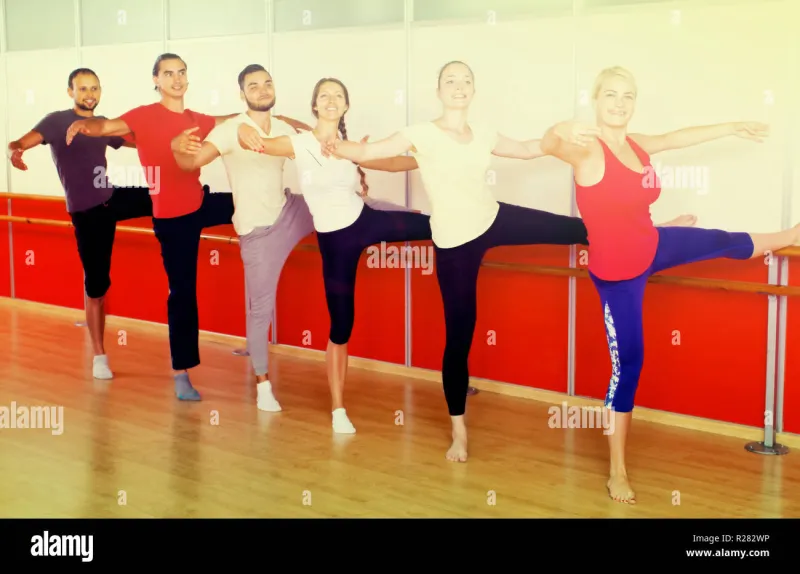
Photo: adult beginner ballet class barre older students smiling, via c8.alamy.com
Every Tuesday at 7 p.m., Diane Moss ties her ribbons, claims her usual spot near the barre, and settles into the same pliés she first attempted in 2014. She could probably advance. Her teacher has hinted at it. She has politely declined.
"People ask when I'm going to move to the intermediate class," she says, laughing. "And I tell them the same thing I told my dentist — I like it right here."
Diane is what studio owners across the country have started calling a beginner lifer: an adult student who returns week after week, year after year, to the same foundational class, not because they're stuck, but because they've decided they're exactly where they want to be.
The Myth of the Level
Somewhere along the way, American adults absorbed the idea that hobbies need ladders. You start at the bottom, you climb, you graduate. Gym memberships come with progress tracking. Language apps send streak reminders. Even yoga studios hand out levels like merit badges.
Ballet, ironically, resists this. Yes, there are graded levels and syllabi and exams. But ask any experienced adult-class teacher and they'll tell you the truth: the plié you do in year ten is not the plié you did in week one. The exercise repeats; the dancer doesn't.
"I have students who've taken beginner ballet for eight, nine, ten years," says Marisol Vega, who teaches adult open classes at a studio outside Portland, Oregon. "Their balance is unrecognizable from when they started. Their musicality is beautiful. But the label 'beginner' matters so little to them that some of them don't even know what level they're 'supposed' to be in."
Why Slow Is the Point
The adult ballet boom is well documented — studios nationwide report surging enrollment in evening and weekend adult classes since the pandemic. What gets less attention is why many of these students stay.
Talk to enough lifers and a pattern emerges. It's rarely about performing. It's rarely even about technique, not really. It's about the hour itself: the music, the order of the class, the feeling of doing one difficult thing well while the rest of life's notifications pile up unanswered in a locker.
For many, advancing to a faster-paced class would actually ruin the experience. Intermediate and advanced classes move quickly, spend less time on explanation, and assume a shared vocabulary. Beginner classes, by contrast, are built around demonstration, repetition, and patience — which happens to be exactly what a stressed-out accountant or a retired teacher wants on a Wednesday night.
"The beginner class is the only class where I'm never behind," one longtime student puts it. "Everywhere else in my life, I'm catching up on something."
What the Teachers See
Teachers who champion their lifers describe something interesting: these students often become the emotional spine of a class. They know the combinations. They know the etiquette. Newer adults — who are frequently nervous, self-conscious, and convinced they're too old or too clumsy — look down the barre and see someone who has been exactly where they are and stayed.
"My lifers are my retention program," Vega says. "A brand-new 45-year-old student watches Diane take the same correction with grace for the fifth year running, and suddenly she thinks, oh, this is a place where I'm allowed to be a work in progress forever."
That's a lesson many of us didn't get growing up. American childhoods are structured around milestones — reading levels, driver's ed, graduation ceremonies. Adult hobbies inherited the same achievement mindset, and it quietly sucks the joy out of a lot of them. The lifers, whether they'd phrase it this way or not, have opted out.
Progress Measured in Decades
There's a case to be made that these dancers are actually progressing faster than anyone — just along a different axis. Not toward harder steps, but toward deeper ones. A decade of adagio develops a kind of patience and body awareness that no accelerated track can shortcut.
It also reframes what a studio is for. Studios that embrace their lifers — rather than nudging them upward and onward — tend to build something rare: multi-generational communities where a 28-year-old returning to ballet after college and a 62-year-old trying it for the first time share the same barre, the same music, the same unhurried pace.
So if you've been circling the idea of an adult ballet class but hesitating because you don't want to commit to "getting good" — take it from the lifers. You don't have to. The class is not a staircase. It's a room, with music playing, and you're allowed to stay in it as long as you like.
Diane's tenth anniversary at the barre came and went without ceremony. "Did you celebrate?" we asked. She shrugged. "I showed up on Tuesday. Same as always. That is the celebration."