Front Row Is Overrated: What Recital Lineups Really Tell You
Photo: Loadmaster (David R. Tribble) This image was made by Loadmaster (David R. Tribble). Email the author: David R. Tribble Also see my personal gallery at Google Photos, CC BY-SA 3.0, via Wikimedia Commons
There's a moment every recital season that studio owners know by heart. The lineup sheets go up — or worse, land in an email at 9 p.m. — and within the hour, the lobby group chat is buzzing. Back row again? Didn't she get front row last spring? Does the teacher not like her?
If you've ever squinted at a stage chart trying to decode your child's placement like it's a secret ranking system, take a breath. We talked with choreographers and veteran instructors about what lineup placement actually means, and the honest answer is: almost never what parents assume.
Spacing Is a Teaching Tool, Not a Trophy
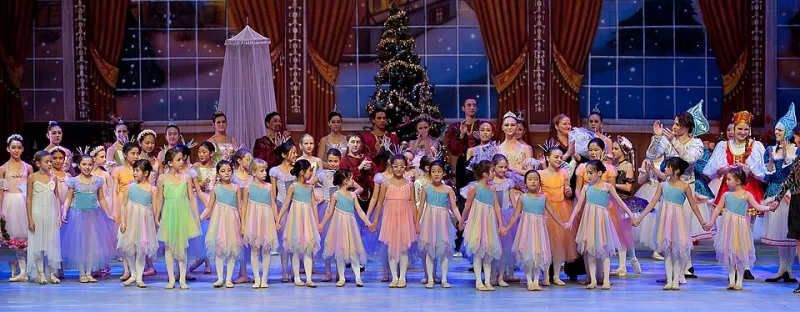
Here's the thing most people outside the studio world don't realize: choreography is built around sightlines, formations, and — most importantly — learning goals. A dancer in the back row isn't hidden. She's often being given room to grow.
"When I place a dancer upstage, it's frequently because I want them to work on confidence without the pressure of being the visual anchor," explains one recital choreographer who's staged youth productions for over fifteen years. "The back row has to know the choreography cold, because nobody's going to cue them. Front row kids can follow the person behind them. Back row kids become the person everyone else follows."
Read that again: the back of the stage often requires more skill, not less. Depth perception, spatial awareness, and the ability to stay oriented when you can't see yourself in the mirror — these are hard-won abilities, and directors deliberately rotate dancers through different positions to build them.
Why Rotation Is the Norm, Not the Exception
Ask a room full of dance teachers about placement philosophy and you'll hear the same word over and over: rotation. Most studios deliberately shuffle lineups between numbers and between seasons so every dancer experiences the stage from multiple angles.
There are practical reasons, too. Taller dancers frequently anchor the back rows so formations read cleanly from the audience — the same reason basketball teams don't put the shortest player at center. Group numbers are also arranged around duets, trios, and featured moments, and those features move around. Your dancer might be back row in the jazz number and front and center in the finale, and both placements were made in the same planning session.
When It Does Feel Personal — What Then?
Look, sometimes kids come home disappointed, and that feeling is real. Dismissing it with "the teacher knows best" doesn't help a nine-year-old who counted the rows. Here's a better play:
- Validate first, interpret later. "You wanted front row and you didn't get it — that's disappointing" goes a lot further than a lecture about stage geometry.
- Ask what the placement lets her do. Reframe it: "Back row means you're the one keeping everyone on count. Think you can handle that?"
- Resist the lobby comparison spiral. Every dancer's placement is part of a different puzzle. Comparing charts between families is where favoritism accusations are born, and they almost never survive contact with actual information.
- If it's a pattern, ask a curious question — not an accusation. A simple "Hey, can you walk me through how you think about lineup placement?" opens doors that "Why is my kid always in the back?" slams shut.
The Long Game
Here's what veteran teachers will tell you quietly, usually over coffee at the competition lobby: the dancers who obsess over placement at eight often burn out by twelve, while the ones who learn to own whatever space they're given become the performers everyone watches — regardless of where they're standing.
Stage presence isn't a row assignment. Some of the most magnetic moments in any recital happen dead center of the back line, from a kid who decided the whole stage was hers.
So when the lineup drops this season, try reading it as a map of what your dancer gets to practice — not a verdict on who she is. The tulle and the lights are temporary. The resilience she builds in that second row? That travels with her everywhere.