From Friday Night Lights to Fifth Position: The Quiet Rise of Boys in Ballet Class
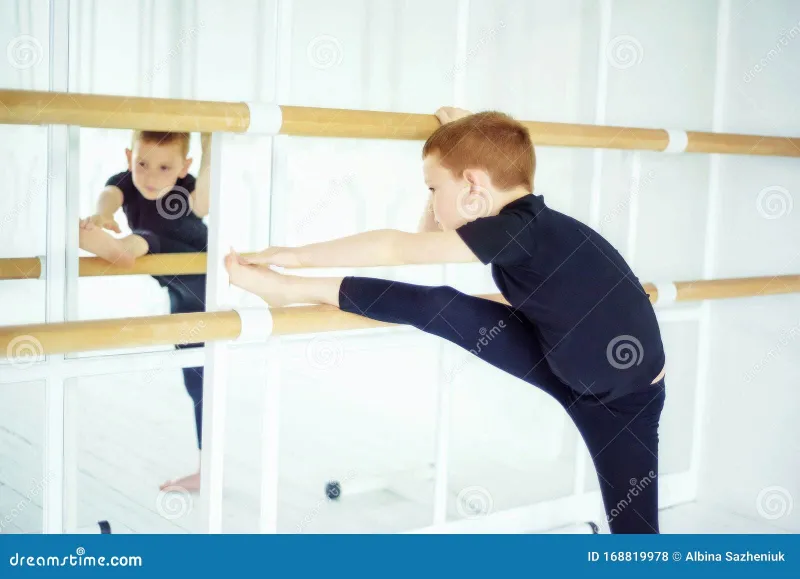
Photo: young boys ballet class barre training, via thumbs.dreamstime.com
Walk into a ballet studio on a Saturday morning and you might notice something that would have been rare a decade ago: boys. Not one token boy, not a pair of brothers dragged along by a sister — a genuine crop of them, warming up at the barre in shorts and T-shirts, cracking jokes between pliés.
At Nuova Ballet Studio and programs like it across the country, male enrollment has quietly climbed year after year. There's no single reason. There are, however, a lot of good ones.
The NFLconnection Is Real
Ask a room of eight-year-old boys why they signed up and you'll get a surprising answer more often than not: football. Fans may remember that NFL players — from Hall of Famers to current wide receivers — have long credited ballet training for their footwork, balance, and injury prevention. Coaches at the youth level have started saying the same thing.
"My dad showed me a video of a player who did ballet to get faster," says Marcus, 10, who splits his week between soccer practice and our Beginner Boys class. "I wanted to see if it worked. It kind of does."
That crossover credibility matters. It gives parents a ready-made answer for skeptical relatives and gives boys a bridge between the activities they already love and something new.
Parents Who Got Past the Playbook
For every boy who begs to enroll, there's a parent who hesitated. The stigma hasn't vanished — it's just gotten quieter, and easier to argue with.
"I worried about how he'd be treated at school," admits Dana R., whose 12-year-old has been dancing for three years. "Then I realized I was the one with the outdated idea. He didn't care what anyone thought. He just wanted to jump off things in a controlled way."
Dana's advice to other parents is simple: let the kid lead. "If your son wants to try it, sign him up for one session. Worst case, he tries something for six weeks. Best case, he finds his thing."
What Instructors See in the Studio
Teachers, meanwhile, are adapting faster than the curriculum manuals can keep up.
"Boys often come in with different energy," says one longtime instructor. "They want to move big, jump, turn, show off a little. The old model — stand still, hold the barre, be silent — can lose them in the first month. So we build classes that channel that energy instead of suppressing it."
That means more grand allegro, more partnering basics, more leaps that feel like athletic feats because they are. Strength work gets framed the way a coach would frame it: core, power, control.
Studio owners have noticed something else, too. Boys who start in a recreational class often stick around longer than anyone expected, and many end up in recitals, which — let's be honest — are the best recruiting events a studio has.
The Age Range Is Widening
It used to be that boys who did ballet started at four and quit by seven. Now instructors see boys starting at 8, 10, even 14, often with a background in gymnastics, karate, or hockey that translates surprisingly well.
The teens are a special case. A 16-year-old beginner needs a different on-ramp than a six-year-old, so many studios now offer boys-only or teen beginner sections where nobody has to feel like the only one in the room.
"The biggest thing is that they're not alone anymore," one program director told us. "When there are five boys in a class instead of one, everything changes. They push each other. They come back."
What Parents Should Know Before Enrolling
If you're considering ballet for your son, a few practical notes:
- Ask about the boys' program. Even if there isn't a dedicated class yet, many studios are building one — your inquiry might be the tipping point.
- Dress code is flexible. Most boys start in a fitted T-shirt, black tights or shorts, and ballet shoes. No one expects a leotard.
- Recitals are optional but recommended. Performing is where confidence gets built, and the boys we spoke to were unanimous: the spotlight is the fun part.
- Expect a strength dividend. Core control, ankle stability, and flexibility show up in every other sport your kid plays.
The Bigger Picture
The surge in boys' enrollment says something about how American parents are thinking, period. The walls between "girl activities" and "boy activities" are thinner than they used to be, and athletic credibility — the NFL kind — has done a lot of the demolition work.
But the boys in the back row aren't there to prove a point. They're there because turning, jumping, and moving with power is genuinely fun. The rest of us are just catching up to them.
If your son has been circling the idea, consider this your sign. The barre has room.