The Person at the Piano Is Running Your Kid's Ballet Class (Sort Of)
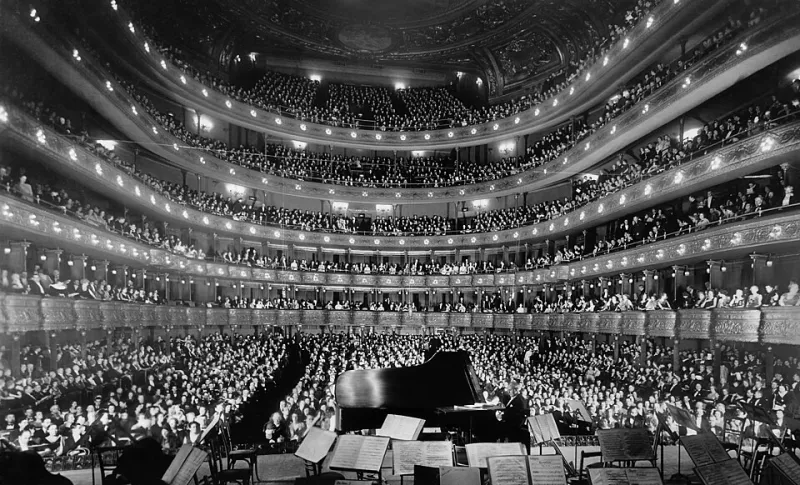
Photo: Unknown or not provided Retouched by Mmxx, Public domain, via Wikimedia Commons
Here's a scene that plays out in ballet studios across America every afternoon: a teacher claps a rhythm, demonstrates a tendu combination, and then nods toward the corner of the room, where someone sitting at an upright piano transforms that exercise into music. The dancers move. The teacher watches the dancers. And almost nobody — not the parents peeking through the lobby window, not the dancers themselves — fully registers the third person in this equation.
That person is the accompanist, and according to the teachers and musicians we spoke with, they may be the most underrated force in your child's training.
The Invisible Conductor
"Parents assume I'm background music, like a Spotify playlist with a pulse," laughs Marta, an accompanist who's played for studios in Ohio and Michigan for over twenty years. "But I'm watching every dancer in that room. If the ten-year-olds are dragging through their adagio, I can lift them. If they're rushing their petit allegro, I can settle them. A recording can't do that."
It's not an exaggeration. Live accompaniment is a constant, real-time conversation. A good pianist reads the room the way a good teacher reads a dancer's posture — noticing hesitation, matching energy, adjusting tempo mid-phrase without anyone announcing it. When a class is clicking, it's often because the music and the movement are breathing together.
Why the Song Matters More Than You'd Think
Ask any ballet teacher and you'll get the same answer: the wrong piece of music can sink an exercise before the first count.
A grand adagio set to something too bouncy turns graceful port de bras into a race. A jumping combination paired with heavy, ponderous phrasing makes even capable dancers land like they're wearing boots. Music with a muddy rhythm — or an unclear downbeat — leaves beginners guessing where to start, which erodes the confidence they're supposed to be building.
"I can tell within eight bars whether a class is going to go well," says Dana, a studio owner outside Atlanta. "Not because of the dancers. Because of the accompanist. If the music has a clear pulse and a phrase that makes sense, kids who've never taken a step of ballet suddenly look like they know what they're doing."
That's the quiet magic of it: great class music does half the teaching. It gives dancers a phrase to breathe with, a downbeat to trust, and an ending to arrive at — all without a single spoken word.
Can't a Playlist Do the Job?
Plenty of studios use recorded music, and plenty do fine work with it. But teachers who've worked both ways describe a real difference.
Recordings have fixed tempos, fixed endings, and fixed dynamics. If a class needs an extra four counts to finish a combination, the track can't stretch. If energy flags at 6 p.m. on a Tuesday, a playlist won't notice. And perhaps most importantly, recorded music doesn't adapt to the students in front of it — it just plays.
"With a live pianist, the music meets the dancer where they are," Dana explains. "With a recording, the dancer has to meet the music. That's a much bigger ask for a seven-year-old."
There's also a cultural argument. Ballet's musical vocabulary — the waltzes, the adagios, the particular phrasing of classical repertoire — is something dancers absorb through their bodies long before they can name it. A pianist who can shift from a lilting 3/4 to a crisp 2/4 teaches musicality without ever saying the word "musicality."
What Parents Should Listen For
So you're touring studios, comparing schedules and prices. Add your ears to the checklist.
Listen from the lobby. If you can hear the class from the waiting area, notice whether the music has a clear, steady pulse. Confused, stop-and-start playing often mirrors a confused class.
Ask about live accompaniment. Not every studio can afford a pianist, and that's okay — but the question tells you what a studio values. Programs that invest in accompanists tend to invest in other details, too.
Watch your dancer come out. Kids move differently after a class with music that carried them. If your child is humming a waltz in the car and practicing their balance while waiting for dinner, something in that room was working — and there's a good chance it started at the piano.
The Takeaway
Ballet class looks like a conversation between a teacher and a mirror full of dancers. But it's really a triangle, and the third corner deserves more credit than it gets. The next time you watch your child's class, let your eyes drift to the corner of the studio. The person at the piano is setting the tempo of your child's training — one phrase at a time.
At Nuova Ballet Studio, we think that's worth celebrating. Because every dancer finds their grace, but nobody finds it in silence.