Six Weeks, One Suitcase: The Real Story Behind Your Dancer's Summer Intensive
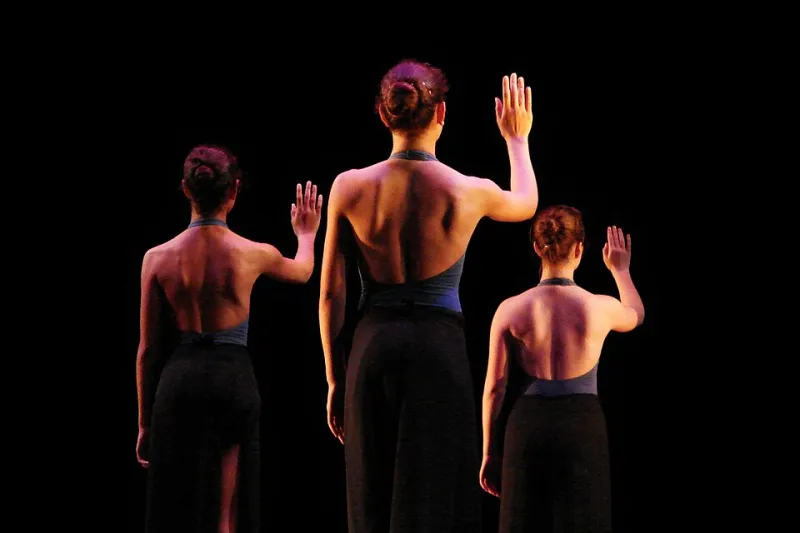
Photo: Loadmaster (David R. Tribble) This image was made by Loadmaster (David R. Tribble). Email the author: David R. Tribble Also see my personal gallery at Google Photos, CC BY-SA 3.0, via Wikimedia Commons
Ask a ballet kid what December means and they'll say the Nutcracker. Ask them what July means, and you'll probably get a grin that has nothing to do with beach trips.
Summer intensives — the multi-week training programs that pack a semester's worth of ballet into a few sweaty weeks — have become the center of gravity for serious young dancers. Studios empty out in June. Dorms at university campuses fill with teenagers in busted pointe shoes. And parents across the country quietly rearrange the family calendar around a five-week residency in, say, Columbus or Durham.
If your dancer hasn't asked about one yet, they will. Here's what you're in for.
So What Actually Happens at an Intensive?
Picture summer camp, minus the canoes, plus a lot of sore hamstrings.
Most intensives run anywhere from two to six weeks, with dancers training five or six days a week. A typical day starts around 9 a.m. with technique class, followed by pointe or variations, a lunch break, then afternoon sessions in everything from pas de deux to contemporary, jazz, or dance history. Some programs end the run with a showcase performance, which is exactly the kind of thing grandparents plan flights around.
The magic isn't just the hours, though. It's the immersion. Kids who see the same ten faces at their home studio all year suddenly share a floor with dancers from four states. They get corrections from teachers they've only seen on YouTube. They come home exhausted, taller (posture-wise), and weirdly nostalgic about a dining hall.
The Application Timeline (Yes, It Starts in Winter)
Here's the part that surprises new ballet parents: by the time school lets out, most of the good options are gone.
A rough calendar looks like this:
- October–December: Major programs open applications. Audition tours — where dancers take a judged class in a host city — get scheduled for January and February.
- January–February: Audition season. Video auditions are also common and cheaper than flying to three cities in a month.
- February–March: Acceptance letters roll out. Popular programs often fill or close waitlists by early spring.
- March–April: Registration deposits, housing forms, and travel bookings.
- June–July: Wheels up.
Miss the window and you're not out of luck — many regional studios run solid local summer programs with later deadlines — but the big-name residential intensives operate on a clock that starts right around the holidays.
Choosing a Program Without Losing Your Mind
The glossy brochures all look the same. A few things cut through the noise:
Fit beats prestige. A 12-year-old intermediate dancer may get more out of a nurturing regional program than a boot-camp-style intensive where they spend three weeks in the back row. Ask about class placement and how students are grouped.
Count the hours honestly. Some programs are rigorous but sane. Others run seven-hour days with little cross-training. If your dancer is new to intense training, a gradual ramp-up matters.
Look at supervision, especially for residential programs. Chaperoned dorms, curfews, and meal plans vary widely. This is a legit question to ask the program office, and good programs expect it.
Read the refund policy. Injuries and family emergencies happen. Know what you're signing.
Let's Talk Money
Intensives are an investment, and it helps to see the full picture before the sticker shock hits:
- Tuition: Anywhere from a few hundred dollars a week at a local studio program to $2,000+ for a multi-week residential intensive.
- Housing and meals: Residential programs often add $1,000–$2,500 depending on length.
- Travel: Flights, airport pickups, and the inevitable forgotten-item shipping fees.
- Gear: Summer means lighter clothing, but pointe shoes burn through fast at this volume — budget for at least one extra pair.
Scholarships and merit awards exist at many programs, and they're awarded through the audition process more often than parents realize. It never hurts to ask. Some families also split summer plans with a local program one year and a residential one the next to spread costs.
Is It Worth It?
For most dancers, yes — but maybe not for the reasons on the brochure.
The technical gains are real. So is the independence: a kid who manages their own schedule, laundry, and blister care for three weeks comes home different. And for dancers wondering whether ballet is truly their thing, an intensive is the most honest test there is. Some fall more in love. Some decide the pool sounds better next July. Both are useful answers.
The best advice from veteran ballet parents? Book the February audition, pack the sunscreen, and clear space on the fridge — because there will be a lot of mail from a very happy, very tired dancer.