Through the Glass: What Your Kid Sees When You Watch From the Window

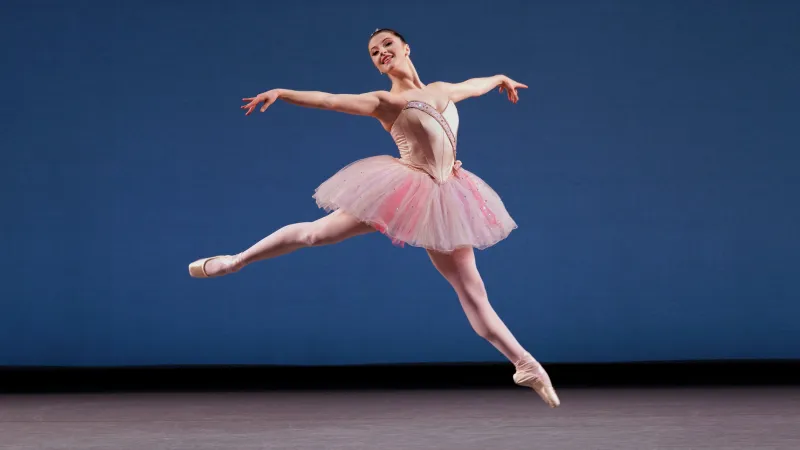
Photo: Official Navy Page from United States of America MC3 Andrew Ryan Smith/U.S. Navy, Public domain, via Wikimedia Commons
There's a particular posture every ballet parent eventually adopts: the lean. One shoulder against the doorframe, phone hovering just below the window ledge, eyes locked on a five-year-old in a pink leotard who is absolutely not looking at the second position in front of her.
If you've spent time in a studio lobby, you know the scene. The observation window — that strip of glass between the waiting area and the dance floor — has quietly become the most debated architectural feature in American dance education. Some parents treat it as a lifeline. Others treat it as a right. And a growing number of teachers wish, respectfully, that it came with an off switch.
The Window Was a Gift. Then It Got Complicated.
Observation windows weren't invented to make parents anxious. They came out of a genuine shift in how dance studios operate. Decades ago, parents dropped kids at the door and came back after class, full stop. As youth activities became more supervised and parents more involved — and as studios competed for enrollment — the window became a trust-building tool. See what you're paying for. Watch your child thrive.
And often, it works exactly as intended. Parents at studios from suburban Ohio to coastal California describe the window as their favorite fifteen minutes of the week. For families with young children, especially first-timers, being able to see that a class is safe, structured, and joyful matters. One Texas mom told us it was the reason her daughter stayed enrolled past the tearful third class: "I could see the teacher kneel down to her level. That's when I stopped worrying."
When Watching Turns Into Pressure
But there's a flip side, and anyone who's stood at the glass has felt it. Teachers describe the experience of teaching to an audience — because that's what a window full of parents becomes.
"You can feel eyes on you the way you feel weather changing," one veteran instructor in the Chicago suburbs put it. "I'll be mid-exercise, and I'll see a parent frown at something. Now I'm teaching the kid and managing the peanut gallery."
The kids feel it too. Child development specialists point out that young children perform differently when they know they're being observed — often trying to locate a parent's face mid-plié instead of listening for the music. Some teachers report that their most distracted students are the ones whose parents watch every single week, waving, mouthing corrections, giving a thumbs up that the child then spends thirty seconds interpreting.
A child psychologist we spoke with framed it simply: for a lot of young dancers, the window turns class from a place where they take healthy risks into a place where they manage an audience. Growth in ballet — like growth everywhere — needs a little room to wobble unwatched.
The Recording Problem
Then there's the phone. Every studio teacher has a story: the parent filming the entire class, the clip posted to a family group chat, the footage that somehow ends up on social media with other people's children in the background. What started as a memory-keeping tool has forced studios into awkward policy territory.
A growing number of studios now ban recording entirely, or restrict it to designated viewing days. Others ask parents to sign media waivers at enrollment. It's a thicket, and most studio owners would rather be teaching than policing it.
So What's the Etiquette?
If the window stays — and in most studios, it will — the parents who get the most out of it tend to follow a few unwritten rules:
- Watch like it's a sunset, not a surveillance feed. Casual glances, not a running commentary in your head about your kid's turnout.
- Put the phone away unless the studio says otherwise. If you want a memory, recital season will provide a hundred of them.
- Don't coach through the glass. Every pointed finger from the lobby is a correction the teacher didn't give — and a signal to your child that class is really about you.
- Embrace the off week. Many studios rotate viewing days for a reason. A month of unobserved classes often produces the biggest leaps.
- Save questions for the teacher, not the window. If something concerns you, ask after class. Don't diagnose from the lobby.
The Case for Occasionally Looking Away
Here's the opinion part, since this is one: the observation window is best treated like dessert. Wonderful in moderation, a problem as a steady diet.
Your child's ballet class is one of the few hours of their week that belongs entirely to them — no parents, no screens, no performance for anyone but themselves and their teacher. That independence is the quiet gift hiding inside the tuition bill. The wobbly first solo across the floor, the mistake nobody at home saw, the small triumph recovered without a thumbs up from the lobby — these are the moments that build a dancer, and honestly, a person.
The glass will always be there. The magic happens on the other side of it, whether or not you're watching.
So lean in, enjoy a few minutes, and then go grab a coffee. Your dancer's best work might be the class you didn't see.